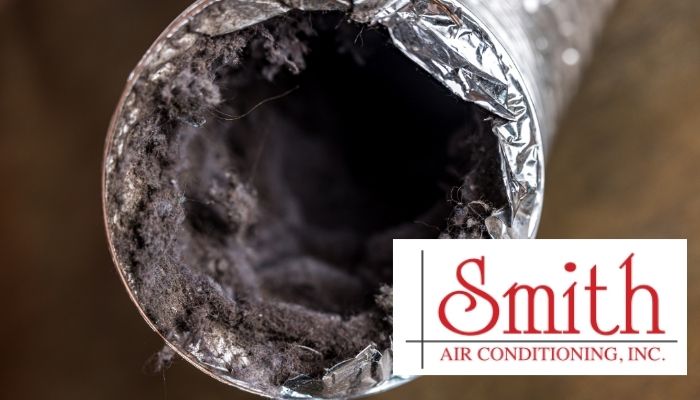
Why Ductwork Problems Are Easy to Miss — and Expensive to Ignore
Your air conditioner might be running perfectly, but if your ductwork is damaged, leaking, or poorly designed, you could still be paying too much for too little comfort. In fact, the U.S. Department of Energy estimates that the average home loses 20 to 30 percent of conditioned air through leaky or poorly connected ducts.
In Acadiana, where your AC system runs much of the year, that kind of waste adds up fast — on your energy bill, on your indoor air quality and on the wear and tear of your equipment.
The tricky part? Ductwork is mostly hidden. It runs through your attic, walls, and crawlspace, so problems can go undetected for years. That's why knowing the warning signs is so important for homeowners and business owners across South Louisiana.
Here are five signs that your ductwork deserves a closer look.
What Damaged Ductwork Is Really Doing to Your Home or Business
Unlike a broken thermostat or a noisy compressor, duct problems don't usually announce themselves with an obvious symptom. Instead, they tend to show up as a slow drain — higher energy bills, uneven temperatures, a stuffy room that never quite cools down. By the time most people realize the ducts are the problem, they've already spent months overpaying on utilities or breathing air that's carrying dust, mold spores, or allergens from inside the walls.
That's why routine inspection matters. And that's why learning to recognize the signs early can save you a significant amount of money and frustration down the road.
Sign 1: Some Rooms Are Noticeably Hotter or Harder to Cool Than Others
If you've ever noticed that one bedroom stays warm no matter how low you set the thermostat, or that one area of your office never seems to cool down, inconsistent airflow is one of the most common symptoms of duct problems.
This can happen because of:
- Disconnected duct sections that are no longer delivering air to certain rooms
- Crushed or kinked flexible duct, especially in attic spaces
- Leaks that allow conditioned air to escape into unconditioned spaces like your attic or wall cavities
- Improperly balanced duct systems that push too much air to some areas and not enough to others
If you've already checked your air filter and your thermostat and the problem persists, it may be time to schedule a duct inspection. Uneven cooling is rarely a comfort issue alone — it usually signals that your system is working harder than it should be to compensate.
Sign 2: Your Energy Bills Have Gone Up Without a Clear Reason
If your energy bills are climbing but your usage habits haven't changed and your equipment checks out, leaky ductwork is often the culprit. When conditioned air escapes into your attic or crawlspace instead of flowing into your living areas, your AC runs longer to try to reach the thermostat's set temperature.
That extra runtime costs money. Here's what to watch for:
- A noticeable increase in your monthly electric bill compared to the same time last year
- Your AC running almost constantly without the temperature ever stabilizing
- Higher bills that don't correspond to an increase in outdoor temperatures
A professional duct inspection can identify where air is escaping and what type of sealing or repair is needed. In many cases, sealing leaky ducts pays for itself quickly in reduced energy costs.
Sign 3: Excessive Dust, Allergens, or Poor Indoor Air Quality
Your ductwork is the pathway through which all the air in your home or building circulates. When ducts have gaps, cracks, or disconnected sections, they don't just let conditioned air out — they also pull in whatever is around them.
In an attic or crawlspace, that can include:
- Dust, insulation particles, and fiberglass
- Mold spores from moisture intrusion
- Rodent droppings or pest debris
- Stale, unconditioned air from uninsulated spaces
If you or your family members are dealing with worsening allergy symptoms, increased dust on surfaces, or a stale smell in the air, your ducts may be pulling in and circulating contaminants throughout your home or business. This is especially worth investigating if you've noticed these issues after moving into a new space, new construction or after renovations.
Sign 4: You Can Hear Rattling, Whistling, or Banging From the Vents
Your duct system should deliver air quietly. If you're hearing unusual sounds when your system kicks on, that's a sign that something inside the duct system isn't right.
Common sounds and what they often mean:
- Rattling or vibrating — loose duct sections, unsecured joints, or debris inside the ductwork
- Whistling or hissing — air escaping through a gap or leak, often near a joint or connection point
- Banging — sections of duct expanding or contracting rapidly, sometimes a sign of undersized ducts or airflow restrictions
- Flapping — flexible duct that has come loose or is partially collapsed
These noises are easy to dismiss as "just the AC," but they're usually telling you something worth investigating. Left unaddressed, loose or vibrating duct sections can worsen over time and turn a simple ac repair into a bigger one.
Sign 5: Your Ductwork Is Old, Visibly Damaged, or Was Never Properly Installed
In older homes and buildings throughout Acadiana, duct systems may be well past their useful life. Flexible ductwork typically lasts 10 to 25 years depending on conditions, and older sheet metal duct systems can develop rust, gaps at the joints, or insulation breakdown over time.
Signs of aging or damaged ductwork include:
- Visible disconnections, tears, or gaps in duct sections you can access (attic, utility closet)
- Duct insulation that is falling off, crushed, or deteriorated
- Flexible duct that is kinked, sagging, or collapsed in areas
- A system that has been modified or added onto over the years without professional design review
It's also worth noting that improperly installed ductwork is surprisingly common, particularly in older homes or in systems that have been modified over the years without professional oversight. If your home has never had a duct inspection performed, it's a good baseline to schedule one — especially before the peak cooling season.
What Happens During a Duct Inspection?
When you call Smith Air Conditioning, Inc. for a duct inspection, a trained technician will:
- Visually inspect accessible duct sections for damage, disconnections, or signs of wear
- Check airflow at each register to identify delivery problems
- Look for signs of moisture, mold, or contamination inside the system
- Evaluate duct insulation, especially in your attic where heat gain is a major issue
- Recommend repairs, sealing, or replacement based on what they find
In some cases, repairs are straightforward — sealing a leaking joint or reconnecting a section of flex duct. In other cases, a more significant repair or replacement may be needed, and a professional can walk you through your options clearly and honestly.
Don't Let Hidden Duct Problems Drain Your Comfort and Your Budget
The ductwork in your home or business is the circulatory system of your HVAC setup. When it's working well, you feel it in every room. When it's not, you feel that too — in your comfort level, your air quality, and your monthly energy bill.
If any of the signs above sound familiar, don't wait it out hoping the problem resolves itself. Duct problems rarely get better on their own — but they can absolutely get worse.
At Smith Air Conditioning, Inc., we've been helping homeowners and business owners across Acadiana breathe easier and stay comfortable. We're based in Ville Platte and proud to serve communities all across South Louisiana.
Call us today 337-363-1866 or send us a message online to schedule your duct inspection and find out what's really going on inside your system.